Tranexamic Acid: Top Esthetician Pick for Dark Spots
 Olivia Monroe- I'm passionate about empowering others through natural beauty practices.
Why Professionals Favor Tranexamic Acid for Hyperpigmentation TreatmentHyperpigmentation ranks among the most challenging and persistent skin issues I encounter during client treatments. It proves difficult to manage, behaves unpredictably, and frequently intensifies due to common, albeit misguided,
Why Professionals Favor Tranexamic Acid for Hyperpigmentation Treatment
Hyperpigmentation ranks among the most challenging and persistent skin issues I encounter during client treatments. It proves difficult to manage, behaves unpredictably, and frequently intensifies due to common, albeit misguided, skincare practices that clients adopt with good intentions.
Addressing hyperpigmentation effectively requires a multifaceted approach rather than relying on a single topical agent. A comprehensive arsenal of ingredients is essential in any regimen targeting discoloration, and recent developments like tranexamic acid, commonly abbreviated as TXA, have sparked particular enthusiasm among skincare experts.
The true appeal of tranexamic acid extends beyond its ability to simply lighten dark spots. Its uniqueness lies in the sophisticated mechanism through which it operates. To fully appreciate why estheticians are increasingly advocating for tranexamic acid, it is crucial to first delve into the underlying processes that lead to pigmentation buildup on the skin's surface.
Understanding Hyperpigmentation Fundamentals
Hyperpigmentation manifests as an excessive production of melanin, resulting in visible brown, red, purple, or grayish discolorations and patches across the skin. Although these spots may appear uniform at first glance, the formation processes occurring beneath the skin's surface vary significantly.
Two primary factors typically initiate this condition:
1. Pigmentation Triggered by Inflammation
Skin inflammation, whether from acne breakouts, excessive exfoliation, insect bites, conditions like eczema or psoriasis, or a weakened skin barrier, prompts the release of a compound known as arachidonic acid. This biochemical response culminates in what is termed post-inflammatory hyperpigmentation, or PIH.
Discolorations of this nature often begin with a reddish hue, transition through shades of purple, and ultimately stabilize into a brownish appearance over time.
2. Pigmentation from UV Exposure
Exposure to ultraviolet rays stimulates melanogenesis, a complex biological process regulated by the enzyme tyrosinase. This enzyme signals the skin cells to ramp up pigment production, leading to brown or grayish spots such as melasma, freckles, and age spots caused by sun damage.
Importantly, UV exposure encompasses not only direct sunlight but also rays filtering through windows and other transparent surfaces.
This distinction becomes particularly noteworthy because the majority of conventional brightening agents target only one of these pathways exclusively. Such a narrow focus represents a substantial drawback in comprehensive treatment strategies.
The Unique Advantages of Tranexamic Acid
Tranexamic acid distinguishes itself by inhibiting the plasminogen pathway, which serves as the common upstream regulator for both major pigmentation triggers.
Through this targeted interruption, tranexamic acid effectively prevents:
- The generation of arachidonic acid, thereby curbing inflammation-driven pigmentation.
- The stimulation of tyrosinase, which in turn halts UV-triggered pigment formation.
Essentially, it extinguishes the inflammatory and pigmentary processes at their inception, before full-blown discoloration can develop.
This innovative dual-pathway inhibition renders tranexamic acid exceptionally potent against a broad spectrum of hyperpigmentation types, rather than being limited to just one category.
Incorporating Tranexamic Acid into Your Skincare Strategy
Among the most efficient methods for introducing tranexamic acid to the skin is via a toner application. Following cleansing, the skin remains clean, exposed, and lightly moisturized, creating optimal conditions for enhanced ingredient penetration. The presence of water facilitates superior absorption of active compounds.
This delivery system informed the development of a specialized toner featuring tranexamic acid, designed specifically to combat persistent discoloration from its root causes while safeguarding the skin's natural barrier. By pairing tranexamic acid with complementary supportive elements, this formulation simultaneously soothes inflammation-related pigmentation and counters UV-induced spots, all without provoking irritation.
Its mild, non-exfoliating profile allows for daily application and seamless integration with additional brighteners such as niacinamide. This makes it particularly suitable for reactive, sensitive skin types or those susceptible to post-inflammatory discoloration. Although chemically classified as an acid, its pH level remains neutral, distinguishing it from exfoliating acids.
Tangible Outcomes from Tranexamic Acid Use
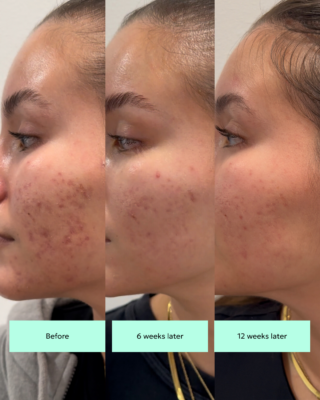
One client, Amanda, who has Skin Type 1, incorporated the tranexamic acid toner into her morning and evening routines consistently for a full 12 weeks. The transformation is evident: her complexion now appears smoother, radiantly brighter, and remarkably more uniform in tone. The before-and-after comparison highlights dramatic improvement.
Tranexamic Acid Versus Popular Brightening Agents
The skincare market overflows with options for tackling pigmentation, yet their efficacy and safety profiles differ widely.
- Hydroquinone delivers strong results but faces strict regulations owing to potential toxicity, and it is prohibited in certain regions. Whenever possible, alternatives are preferable.
- Kojic acid and arbutin often prove unstable and prone to causing irritation.
- Azelaic acid excels primarily for rosacea management and progresses slowly against pigmentation.
- Alpha hydroxy acids offer robust effectiveness but heighten sun sensitivity and risk inflammation, particularly during in-office peels.
- Retinoids perform well yet frequently irritate, especially on reactive skin.
- Vitamin C boasts high efficacy, though formulation quality varies greatly; some are stable and non-irritating, so selection requires care.
Tranexamic acid emerges as superior due to its precise action, gentleness, and ability to tackle both pigmentation pathways without exacerbating inflammation.
Optimal Incorporation of Tranexamic Acid into Daily Routines
To maximize benefits, apply tranexamic acid immediately after cleansing on slightly damp skin. A toner format enhances absorption and encourages habitual use.
Daily broad-spectrum sunscreen application remains absolutely essential. Without it, brightening efforts are undermined by ongoing UV-induced pigment production. Regular exfoliation further supports these treatments. Personalized recommendations can guide product choices based on individual skin profiles.
Key Takeaways for Effective Brightening
Since hyperpigmentation arises from multiple pathways, treatments must address them comprehensively rather than in isolation.
Tranexamic acid qualifies as one of the rare ingredients capable of intercepting both inflammation-based and UV-induced pigmentation at their origins. Its gentle yet powerful nature makes it invaluable for sensitive skin or those prone to post-inflammatory marks. It enhances any hyperpigmentation regimen seamlessly.
Estheticians champion it not for fleeting trends, but for its intelligent synergy with skin biology and proven capacity to yield authentic, noticeable improvements.
Supporting Research References
Clinical studies underscore tranexamic acid's efficacy:
- A 5% TXA cream outperformed 3% hydroquinone in improving freckles on darker Fitzpatrick skin types over 12 weeks, while preventing new formations. (PubMed: 31057273)
- A 5% TXA serum effectively diminished post-inflammatory redness from acne lesions. (PubMed: 31589950)
- A 2% TXA cream substantially reduced melasma visibility over 12 weeks. (PubMed: 27135282)
- Combining 2% TXA with 2% niacinamide led to significant facial hyperpigmentation reduction in 8 weeks. (PubMed: 24033822)
Subscribe to the newsletter
Join 50,000+ others who get our content first. No spam, ever.